What the evidence shows.
This page states what the published work shows and links every claim to its source. The full list of peer-reviewed publications is at the foot of the page.
The test-day effect, measured.
Lead author Brian E. Lacy, Division of Gastroenterology & Hepatology, Mayo Clinic, Jacksonville, Florida.
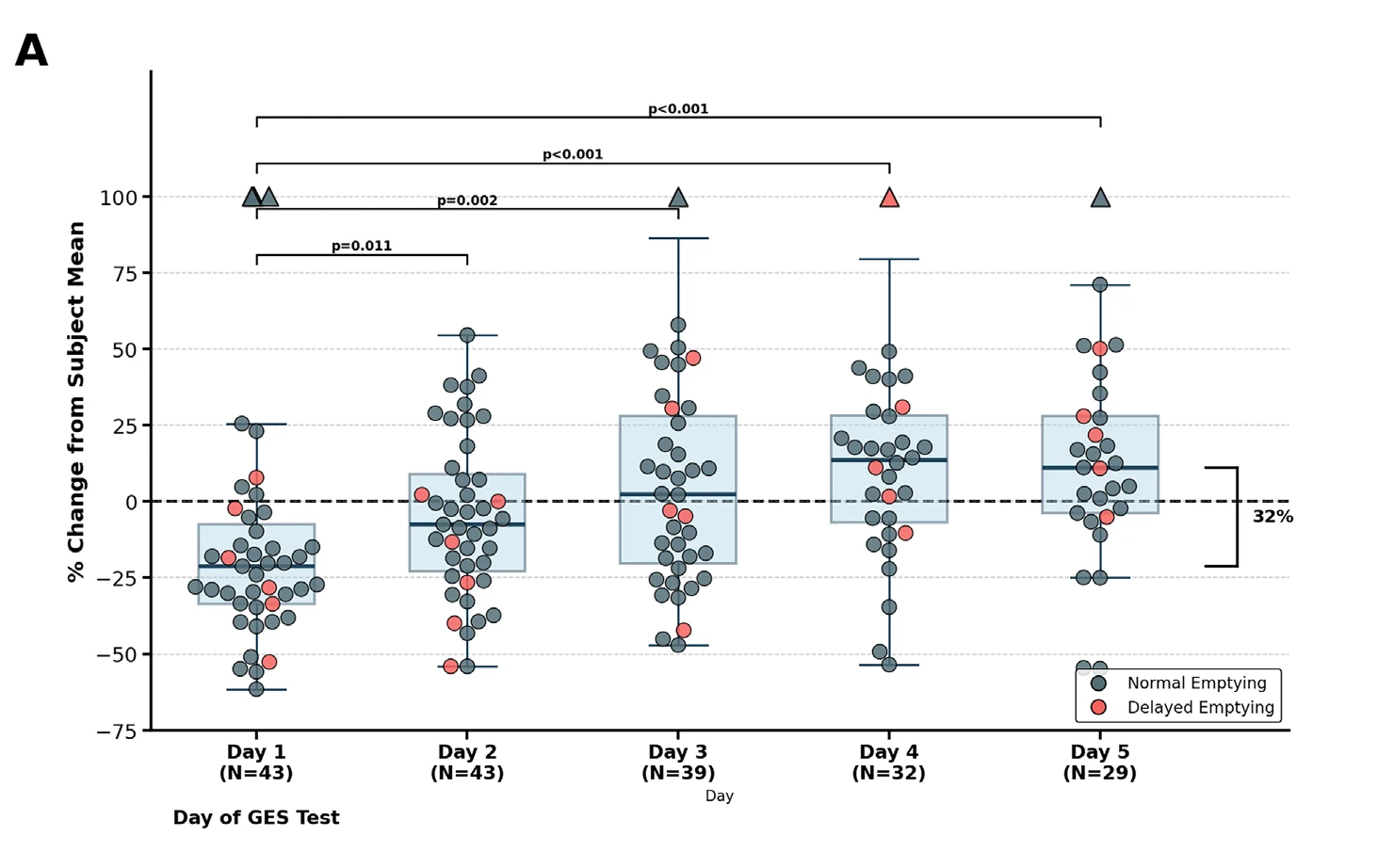
In this prospective Mayo Clinic Jacksonville study, 48 adults referred for gastric emptying scintigraphy (GES) wore the wireless patch system for up to six days, starting on the day of the scan. GES classified emptying as delayed in 18%, rapid in 22%, and normal in 60% of subjects, and over the full multiday recording GES results showed no correlation with the myoelectric readings. The two describe different physiology, transit of a meal against smooth-muscle electrical activity, so neither measurement predicts or substitutes for the other.1
The finding the figure carries: the day a patient is tested is not an ordinary day. Gastric activity was systematically lowest on the test day itself and climbed to a stable baseline over the following days. A measurement window could sample a day that is not representative of multi-day mean function.1
Read the full study at the publisher: Lacy BE, Cangemi DJ, Axelrod L, Axelrod S, Navalgund A. Beyond the snapshot. Neurogastroenterology & Motility. 2026;38:e70413.
The measurement is real, and validated against internal electrodes.
In ambulatory pigs, external patches and implanted serosal electrodes recorded the same animals simultaneously for six days, with clear spectral congruence between the two.2
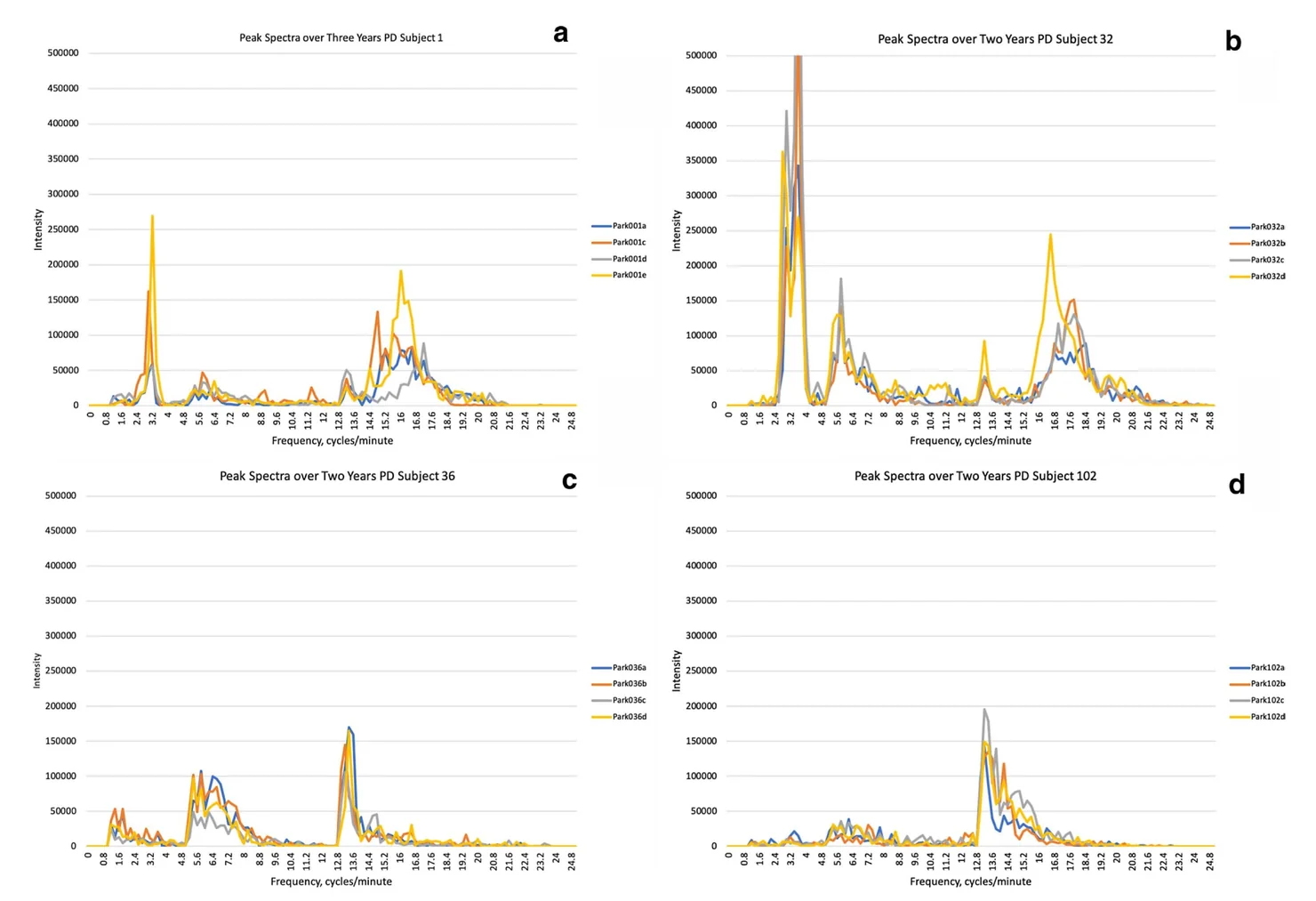
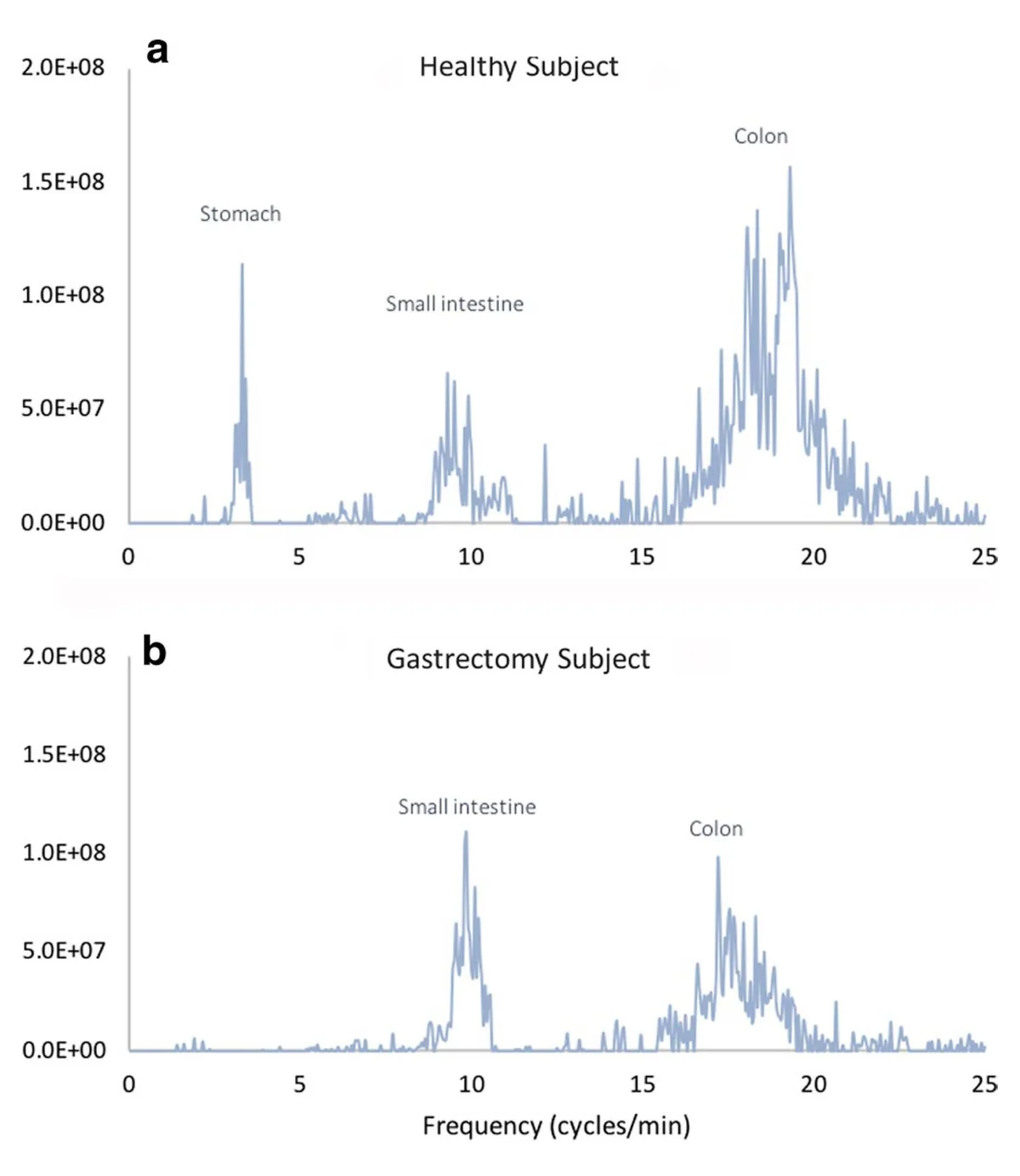
Clinical signals, stated with their numbers.
Chronic nausea and vomiting
In 23 consecutive adults referred for gastric emptying scintigraphy, delayed 4-hour emptying was associated with weak gastric myoelectric activity.4
Medication response, measured
In the retesting cohort, anti-emetics produced robust increases in gastric amplitude while proton pump inhibitors showed minimal impact.1
Two different quantities
Across the full multiday recording, scintigraphy results showed no correlation with the myoelectric readings. Emptying rate and myoelectrical activity describe different physiology, so neither measurement stands in for the other.1
References
- Lacy BE, Cangemi DJ, Axelrod L, Axelrod S, Navalgund A. Beyond the snapshot: overcoming GES limitations to characterize gastric phenotypes and therapeutic responses using a 6-day ambulatory wearable monitor. Neurogastroenterology & Motility. 2026;38:e70413. doi:10.1111/nmo.70413 Source (opens in a new tab)
- Salimi-Jazi F, Thomas A-L, Rafeeqi T, Diyaolu M, Wood LSY, Axelrod S, Navalgund A, Axelrod L, Dunn JCY. Gastrointestinal myoelectric measurements via simultaneous external and internal electrodes in pigs. Journal of Surgical Research. 2022;279:119–126. doi:10.1016/j.jss.2022.05.012 Source (opens in a new tab)
- Axelrod L, Axelrod S, Navalgund A, Triadafilopoulos G. Pilot validation of a new wireless patch system as an ambulatory, noninvasive tool that measures gut myoelectrical signals: physiologic and disease correlations. Digestive Diseases and Sciences. 2020. Source (opens in a new tab)
- Lacy BE, Cangemi DJ, Accurso JM, Axelrod S, Axelrod L, Navalgund A. A novel pilot study to evaluate the efficacy and safety of a wireless patch system in patients with chronic nausea and vomiting. Neurogastroenterology & Motility. 2024;36(9):e14862. Source (opens in a new tab)
Peer-reviewed publications
Four peer-reviewed papers on the GutTracker wireless patch system. Each entry links to PubMed. Summaries are in our own words; the source is authoritative. Manuscripts under review are not listed, and a publication appears here once it has a DOI or a PubMed identifier.
Beyond the snapshot: overcoming GES limitations to characterize gastric phenotypes and therapeutic responses using a 6-day ambulatory wearable monitor
Lacy BE, Cangemi DJ, Axelrod L, Axelrod S, Navalgund A. Neurogastroenterology & Motility. 2026;38:e70413.
Forty-eight adults referred for gastric emptying scintigraphy wore the system for up to six days. Over the full multiday recording, GES results showed no correlation with the myoelectric readings; gastric activity was lowest on the test day itself and stabilized by Day 4, while healthy controls showed no such pattern. In the retesting cohort, anti-emetics produced robust increases in gastric amplitude and proton pump inhibitors showed minimal impact. PubMed (opens in a new tab)
A novel pilot study to evaluate the efficacy and safety of a wireless patch system in patients with chronic nausea and vomiting
Lacy BE, Cangemi DJ, Accurso JM, Axelrod S, Axelrod L, Navalgund A. Neurogastroenterology & Motility. 2024;36(9):e14862.
Twenty-three consecutive adults referred for gastric emptying scintigraphy wore three patches for six days. Delayed 4-hour emptying was associated with weak gastric myoelectric activity; functional dyspepsia with weak gastric and intestinal activity and a weak pan-intestinal meal response. PubMed (opens in a new tab)
Gastrointestinal myoelectric measurements via simultaneous external and internal electrodes in pigs
Salimi-Jazi F, Thomas A-L, Rafeeqi T, Diyaolu M, Wood LSY, Axelrod S, Navalgund A, Axelrod L, Dunn JCY. Journal of Surgical Research. 2022;279:119–126.
Internal serosal electrodes and external skin patches recorded ambulatory pigs simultaneously for six days. External patches detected a substantial fraction of internally measured activity with clear spectral congruence. PubMed (opens in a new tab)
Pilot validation of a new wireless patch system as an ambulatory, noninvasive tool that measures gut myoelectrical signals
Axelrod L, Axelrod S, Navalgund A, Triadafilopoulos G. Digestive Diseases and Sciences. 2020.
Feasibility, safety and reproducibility of surface myoelectric recording across a range of physiologic and pathologic states. The authors state that further validation is required to determine how best to use the information clinically. PubMed (opens in a new tab)
Conference presentations are listed separately and are available on request.