Gut Insight™: from a completed study to a signed, audit-ready interpretation.
Gut Insight™ is the clinical workflow platform for the GutTracker wireless patch system, FDA-cleared under K212954. It carries each completed study from report to physician: verified report intake, measured values beside a guided interpretation workspace, a signed interpretation packet with a complete audit trail, and practice operations from scheduling to supply, in one place.
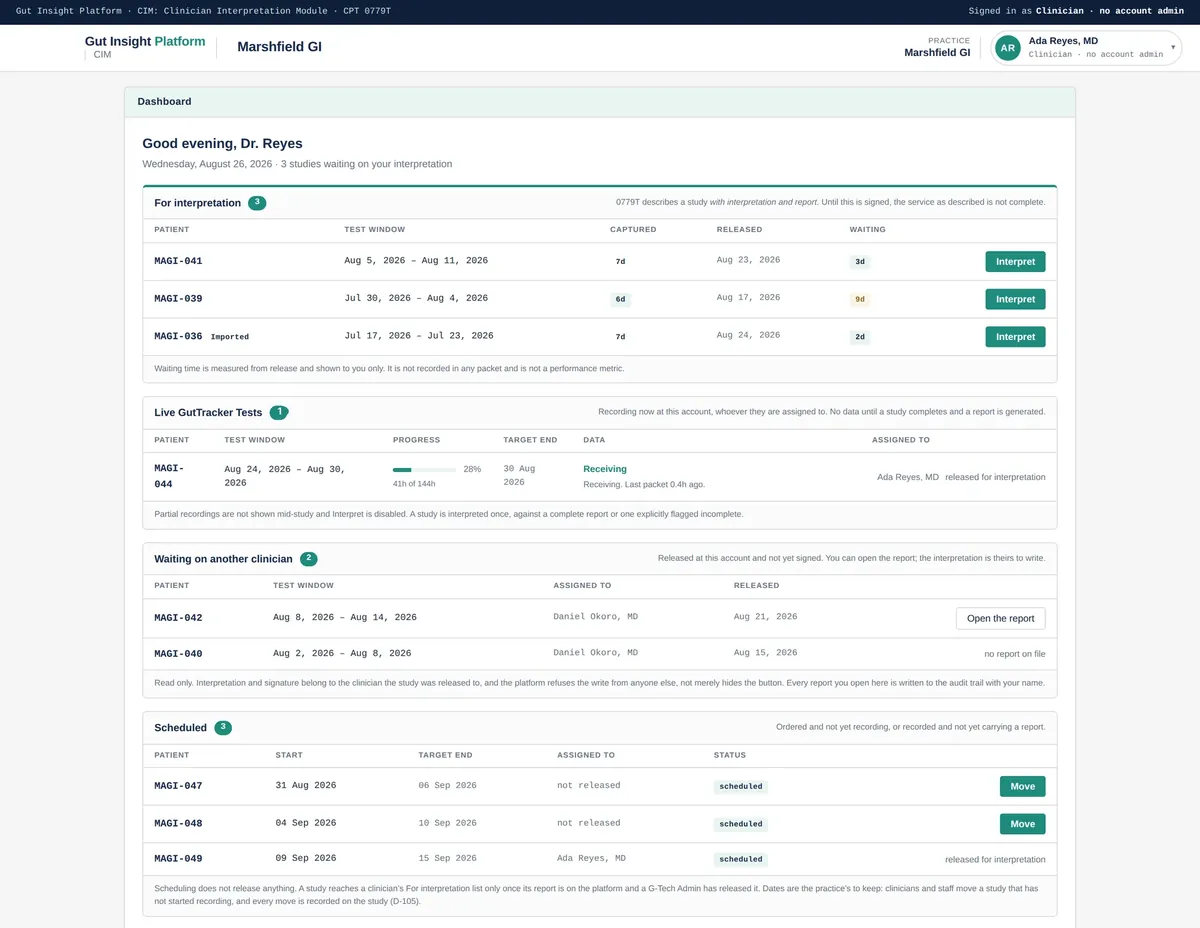
Three commitments, on every screen.
The measurement is the foundation
GutTracker records days of gastrointestinal myoelectrical activity in daily life, and the platform presents those measurements faithfully: what was read is shown, what was not read is said plainly, and nothing is invented.
The physician stays the physician
The platform structures the work, enforces who may interpret and sign, and records every step. Interpretation, diagnosis, and plan remain the credentialed clinician’s, and the system refuses writes from anyone else.
The record is built for scrutiny
Fingerprinted reports, revision-checked edits, signed packets that are never altered afterward, and an audit trail on every view. The platform assumes someone will one day check, and welcomes it.
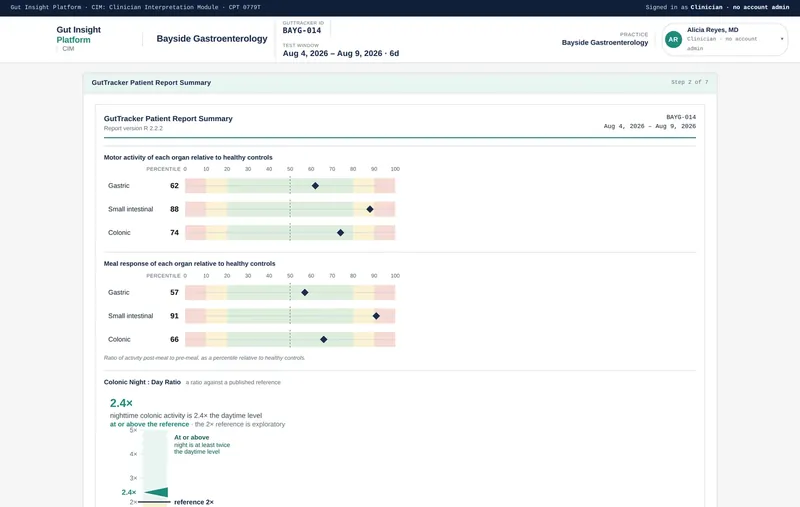
Measured values, kept beside the work.
When a GutTracker report reaches the platform, Gut Insight™ reads the printed measurements and keeps them with the study: motor activity and meal-response percentiles for each organ, and the colonic night-to-day ratio against its published reference. The 2× reference is exploratory and labeled so on screen.
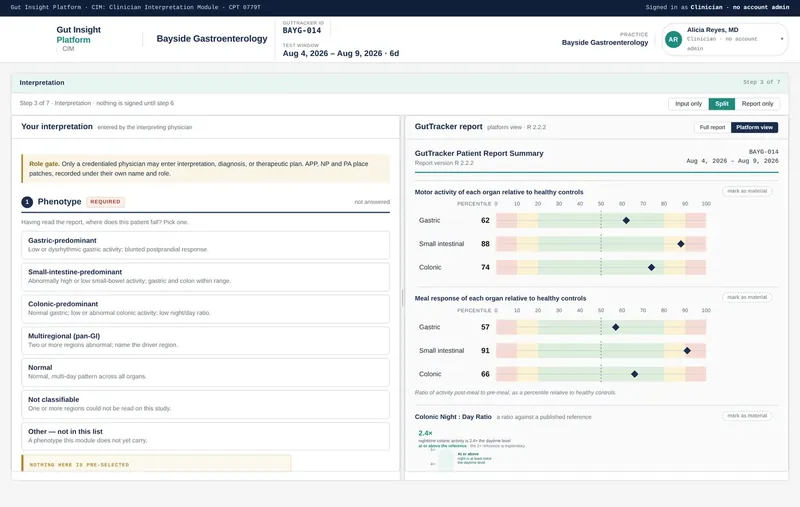
Structure for the physician’s judgment.
The custom Clinician Interpretation Module supports rapid identification of underlying functional issues, helps identify the functional phenotype, and aids in recording of diagnostic and therapeutic plans.
Gut Insight™ is a bespoke GI diagnostic platform.
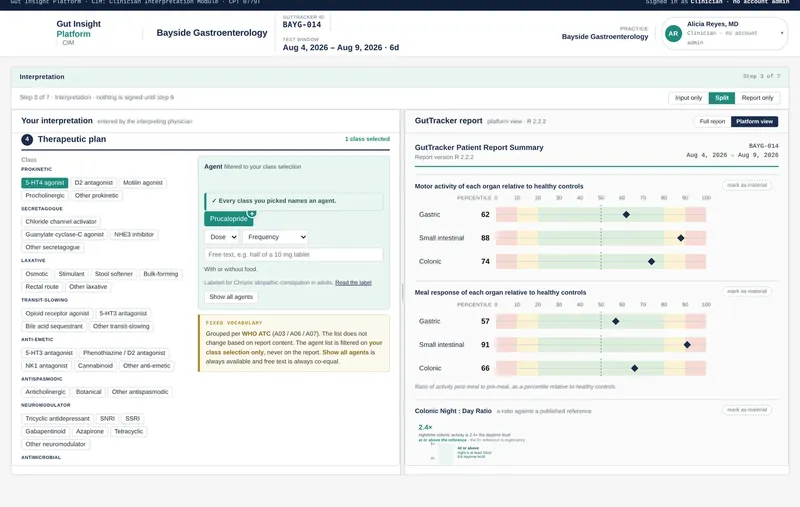
A fixed vocabulary for the plan the physician writes.
The plan is entered against a fixed clinical vocabulary: therapeutic classes grouped per the WHO Anatomical Therapeutic Chemical (ATC) classification system,1 agents filtered to the classes the physician picked, dose and frequency from the FDA label, and a working link to the label on every agent. The list never changes based on report content and nothing is pre-selected.
A class without a named agent is flagged as an unfinished decision, off-label uses are stated as such, and free text is co-equal for anything the vocabulary does not carry. The platform structures the plan; it does not suggest one.
A record built to be checked.
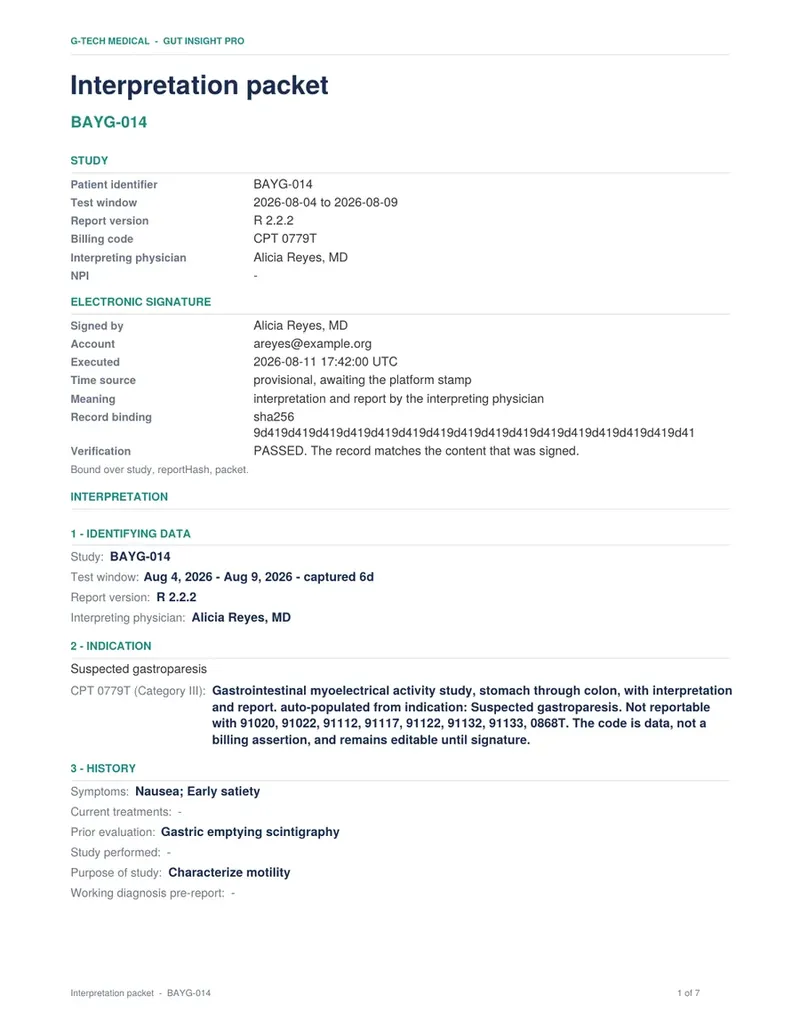
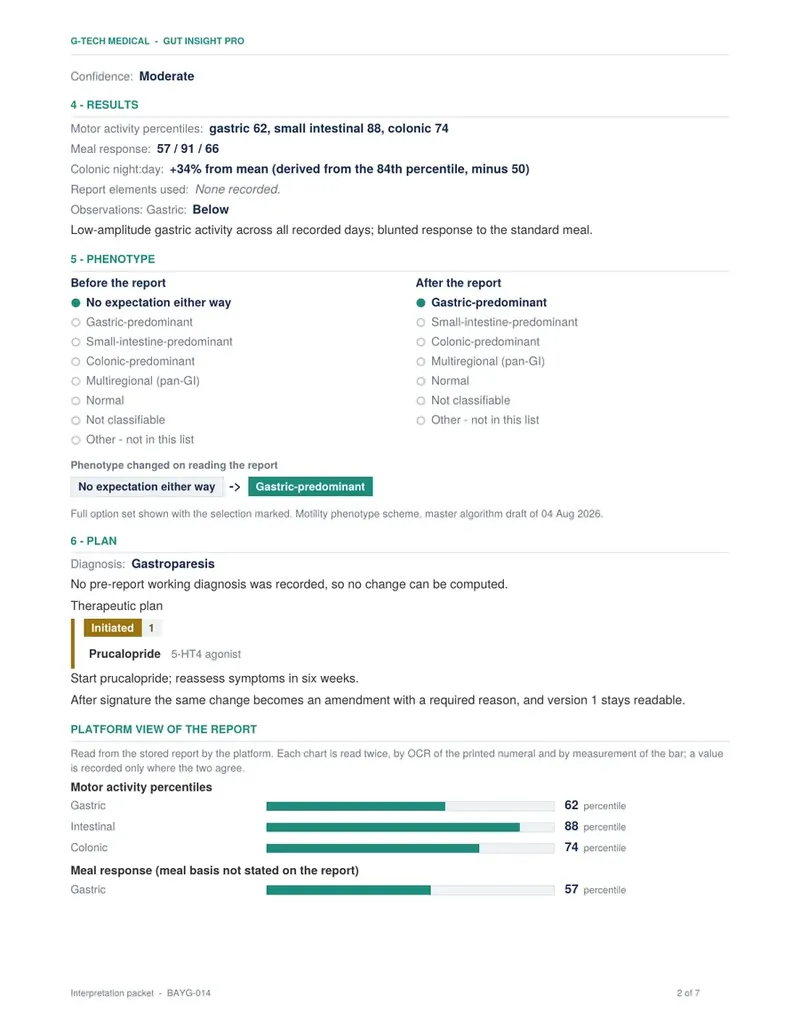
Signing produces the interpretation packet: the physician’s interpretation and plan, the platform’s measured values, the full report copied page for page, and the audit trail, assembled into one flat PDF. The signature block carries a cryptographic record binding, recomputed and verified at assembly, so the packet can prove it matches what was signed.
A signed packet is never edited. A wrong one is retracted and reissued as a new revision, with both the retraction and its reason on the record. That is the difference between a PDF and a record.
Every interpretation fuels future development.
After signing the report, clinicians are asked a series of questions focused on measuring whether the report changed the diagnosis, the management, or the phenotype relative to the prior workup. Responses arrive de-identified, carrying no patient data, and the console recomputes the meta-analysis live on every filter change.
This is how the platform observes where the measurement moves clinical thinking, stated as observation, not as an outcomes claim.
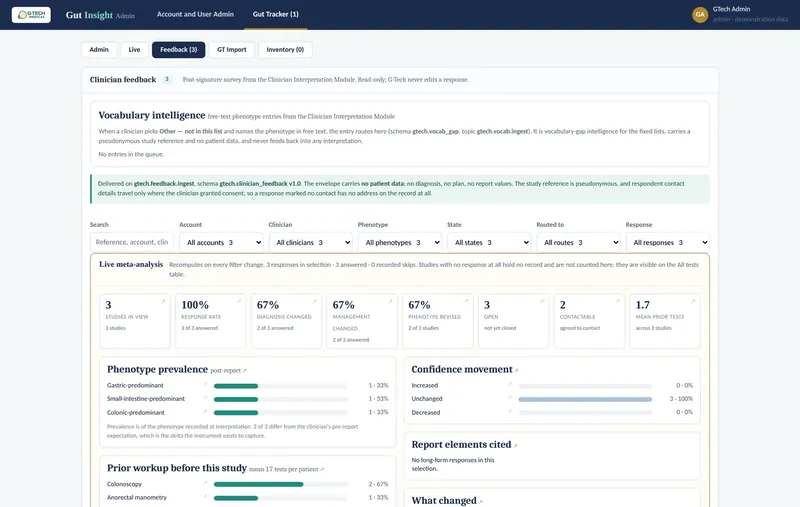
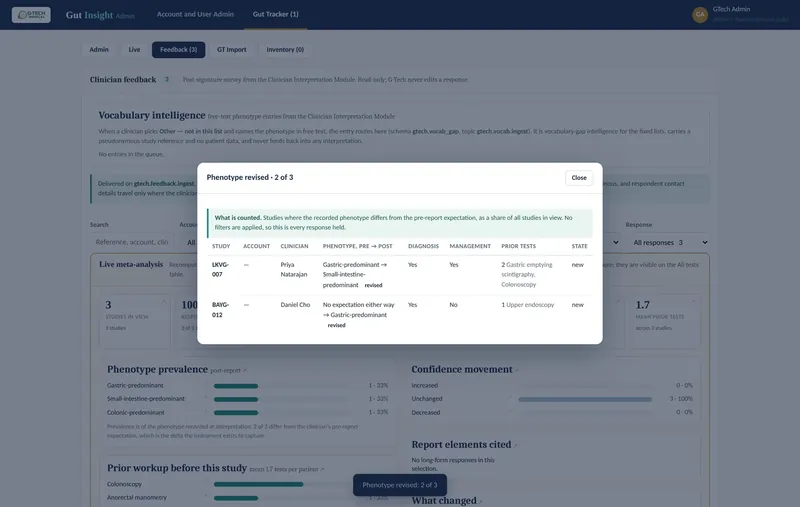
Before the report, and after it.
Every headline number in the meta-analysis opens to the studies behind it, showing what the clinician expected before the report beside what they concluded after reading it.
That difference is what the instrument exists to capture.
Every study on one screen.
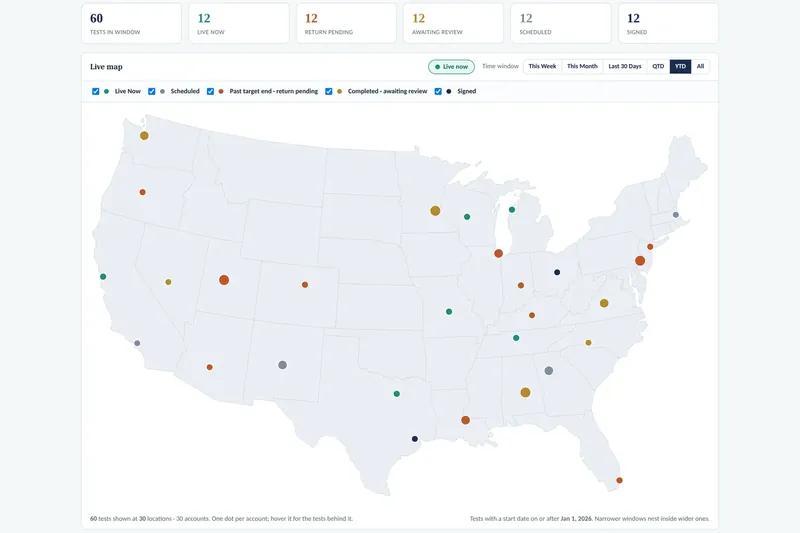
The live map places every account by its own geography and colors each pin by what is happening there right now: recording, scheduled, past target end, completed and awaiting review, signed. Time windows nest from this week to all time.
A compliant platform.
Access is by named account with role-based permission enforced server-side. Reports live in encrypted storage behind authenticated, short-lived links, and every open is written to the audit trail. Sessions end themselves after inactivity, with in-progress work saved to the platform first. Access logging covers both storage and delivery. Signed records are immutable; corrections happen by recorded retraction and reissue, never by edit. A software bill of materials ships with every release.
What the platform is built to
- HIPAA Security Rule technical safeguards (45 CFR 164.312). Access control, audit controls, record integrity, and transmission security are designed to the Security Rule’s technical safeguard standards, which apply to G-Tech directly as a business associate.
- 21 CFR Part 11. Electronic records and signatures are designed to Part 11: signed records are attributable, time-stamped, and bound to the record they sign, and every change is itself a record.
- NIST cryptographic guidance. Data is encrypted in transit using TLS configured to NIST SP 800-52 guidance and encrypted at rest with AES-256.
- HIPAA minimum necessary (45 CFR 164.502(b)). Roles limit each user to the information their work requires, enforced server-side on every request rather than hidden in the interface.
What Gut Insight is.
Gut Insight™ is the clinical workflow platform for the GutTracker wireless patch system, the G-Tech Wireless Patch System cleared under K212954. The clearance covers measurement of gastrointestinal myoelectrical activity and reporting of that measurement. The platform presents, computes, displays, records, and audits those measurements.
References
- WHO Collaborating Centre for Drug Statistics Methodology, Norwegian Institute of Public Health. Anatomical Therapeutic Chemical (ATC) classification system: structure and principles. Source (opens in a new tab)